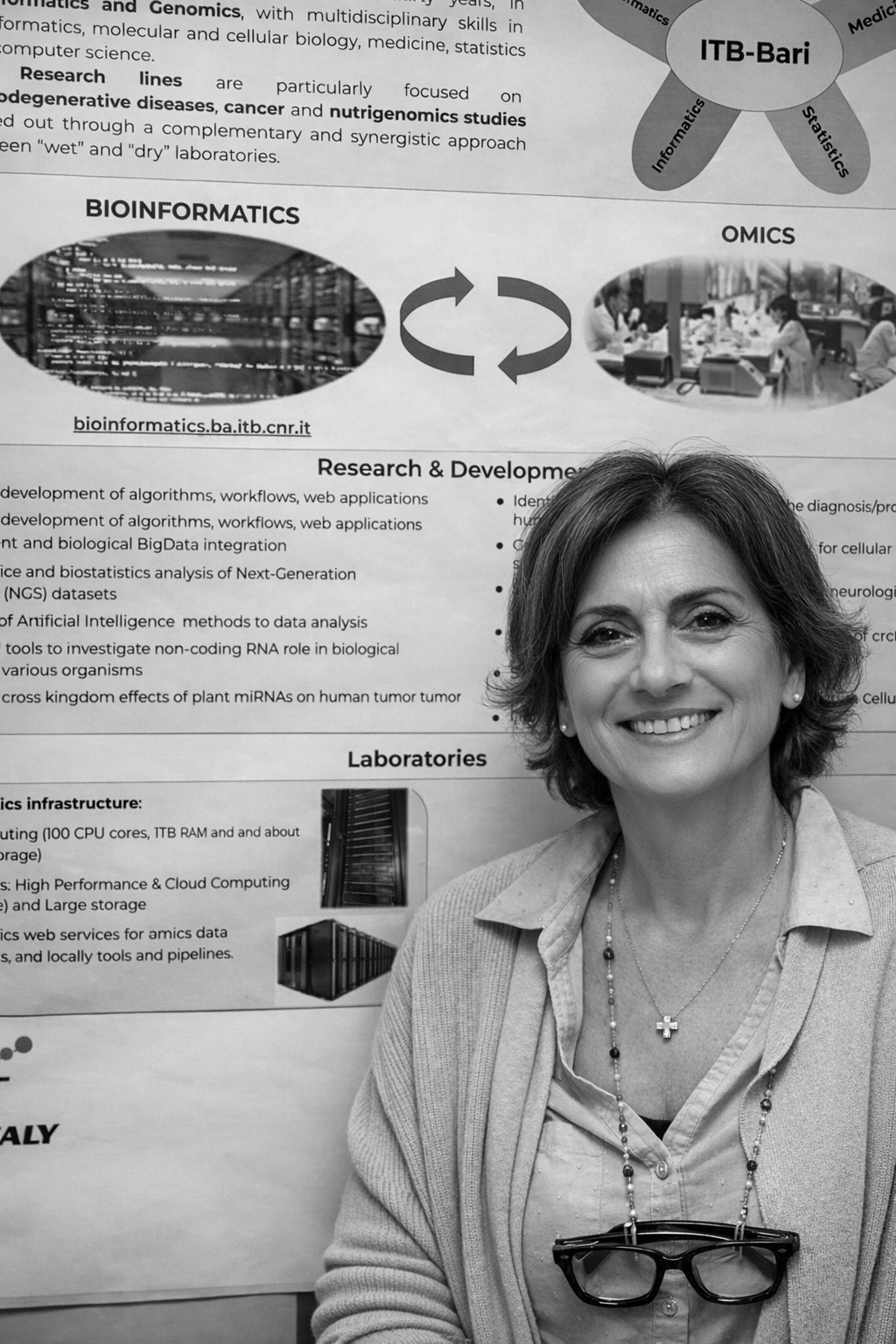
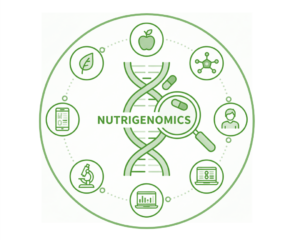
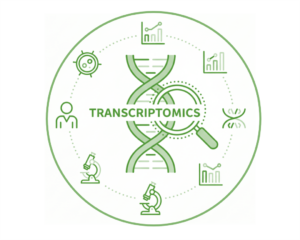
My activity at the CNR is primarily in the biomedical field and in scientific communication. I got a PhD in Biochemistry and Molecular Biology and have acquired expertise in bioinformatics, omics sciences, and molecular diagnostics over the years. My work involves developing effective solutions for analysing complex data for clinical applications, such as identifying early disease biomarkers. My specific field of study concerns non-coding RNAs, with a particular focus on the role of miRNAs in mechanisms related to the onset and development of diseases. In this field, I study tumours, ageing, and neurodegenerative diseases. In a long-standing collaboration with the Department of Computer Science at the University of Bari, I have contributed to the development of machine learning-based models and tools for analysing complex molecular regulatory networks. These models aim to elucidate physiological and pathological molecular mechanisms through the integration of large amounts of molecular data from large-scale studies. Currently residing in Bari, I collaborate with national and international networks to promote translational science. My goal is to optimise biomedical research results to provide easily applicable, cost-effective, and non-invasive solutions for early diagnosis, disease progression, or even as tools for monitoring therapeutic efficacy. Another area of application I have been working on for several years, in collaboration with CREA (Council for Agricultural Research and Analysis of Agricultural Economics) in Turi, is the study of the nutritional properties of table grapes. I have developed a nutrigenomics study on healthy subjects and am currently analysing comparative transcriptomics data to identify nutritionally more valuable table grape varieties.
Research Activities
Transcriptomic profiling for coding and non-coding RNAs biomarker discovery and regulatory pathway analysis
Transcriptomic profiling of tumor extracellular vesicles (EVs) as intercellular communication mediators and for liquid biopsy and drug delivery applications
Transcriptomic analysis of peripheral blood cells to assess changes in gene expression triggered by specific dietary patterns or nutrients.
Development of bioinformatics tools for Big Data analysis.
Application of advanced statistical methods, machine learning, deep learning, explainable AI (XAI), and data mining for predicting pathological mechanisms, identifying disease biomarkers and supporting patient stratification.
To provide the best experiences, we use technologies like cookies to store and/or access device information. Consenting to these technologies will allow us to process data such as browsing behaviour or unique IDs on this site. Not consenting or withdrawing consent, may adversely affect certain features and functions.
Functional
Always active
The technical storage or access is strictly necessary for the legitimate purpose of enabling the use of a specific service explicitly requested by the subscriber or user, or for the sole purpose of carrying out the transmission of a communication over an electronic communications network.
Preferences
The technical storage or access is necessary for the legitimate purpose of storing preferences that are not requested by the subscriber or user.
Statistics
The technical storage or access that is used exclusively for statistical purposes.The technical storage or access that is used exclusively for anonymous statistical purposes. Without a subpoena, voluntary compliance on the part of your Internet Service Provider, or additional records from a third party, information stored or retrieved for this purpose alone cannot usually be used to identify you.
Marketing
The technical storage or access is required to create user profiles to send advertising, or to track the user on a website or across several websites for similar marketing purposes.